

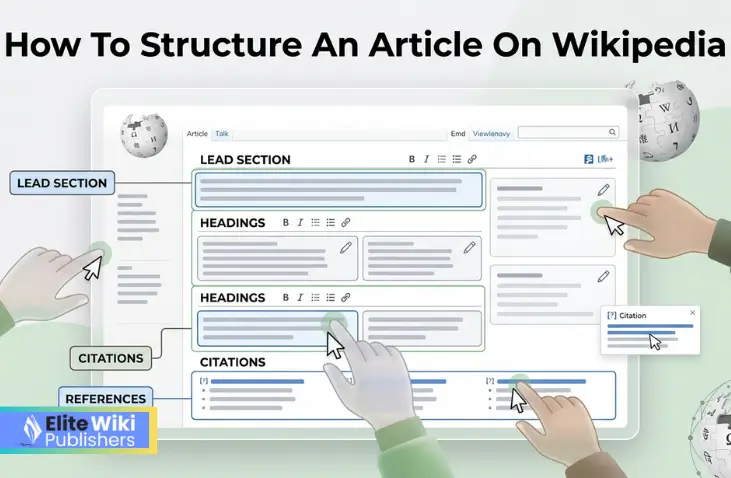
The process of creating a new entry on the world’s largest encyclopedia often begins with a misunderstanding of what a “proper” page looks like. Many new contributors focus heavily on the prose or the technical formatting of links and bold text, yet they overlook the foundational element that determines whether a page survives its first 24 hours: the layout. Learning how to structure an article on Wikipedia is a prerequisite for any successful editor.
It is not merely about aesthetic appeal; it is about adhering to an architectural standard that signals neutrality, reliability, and encyclopedic intent. When an article is built upon a fragmented or promotional skeleton, it draws immediate scrutiny from the community. To provide value to the platform, one must move beyond the mindset of a content creator and adopt the mindset of an archivist.
How To Structure An Article On Wikipedia — Editor Expectations Explained
When editors evaluate a submission, they look for a ‘proper structure’ mirroring established high-quality entries. Knowing how to structure a Wikipedia article to avoid deletion means following a logical progression from general to specific. There is a difference between structure and formatting; while formatting is the ‘look,’ structure is the ‘logic’ that helps a page survive its very first day.
Editors use your layout as a quick health check to keep up with how often is Wikipedia updated. Since a messy layout usually screams “bias” or “bad sources,” they prioritize:
- Clear Hierarchy: Using nested headings (H2, H3) to organize topics.
- Neutral Organization: Ensuring that no single viewpoint or achievement is given undue prominence.
- Encyclopedic Flow: A narrative that moves chronologically or logically rather than jumping between disconnected facts.
Wikipedia Article Structure Guidelines For Approval And Long-Term Stability
The way you choose to structure a Wikipedia article directly impacts its survival. In the “Articles for Creation” (AfC) queue, reviewers can spot a promotional or poorly researched draft just by looking at the Table of Contents.
- New Article Acceptance: A standard layout proves the author understands the platform’s rules.
- Speedy Deletion Reviews: Structure stops deletions; it’s the first rule of how to become a Wikipedia consultant.
- Long-Term Page Stability: Once a page is live, a solid structure prevents “edit wars” because every piece of information has a designated, logical place to live.
Poorly structured articles are flagged despite great sources. Learning How to structure a Wikipedia article to avoid deletion prevents rookie errors like promotional ordering or missing references that trigger an immediate rejection. Many people seek Wikipedia editing services specifically to fix these structural red flags before they lead to a permanent ban.
Standard Wikipedia Article Format Explained For Proper Structure
Proper structure follows the Manual of Style (MoS), the ultimate guide on how to structure an article on Wikipedia. This rigid framework ensures consistency across millions of pages by focusing on three core things: topic importance, source availability, and reader expectations.
Editors expect you to follow a content-first, not brand-first, logic. If you are asking yourself, “how much does it cost to edit Wikipedia?” you should instead be asking how much time it takes to align your draft with these consensus-driven rules. If the available independent sources don’t cover a person’s “Early Life,” you cannot include that section. The sources dictate the headers. If you need help identifying these sources, Wikipedia notability services can be an invaluable resource.
What Sections Should A Wikipedia Article Have In Its Core Structure
When you learn how to structure an article on Wikipedia, there are mandatory sections that editors expect to see. Missing these is a fast track to a “Draft Declined” notification.
Lead Section — How to Structure the Wikipedia Content for First Impressions
The lead section is the most critical part of the page. Its purpose is to serve as a standalone summary of the entire article.
- What Editors Look For: It must be a summary, not an introduction. It should contain no new information that isn’t already detailed in the body.
- Length Expectations: Depending on the topic, a lead should be between 1 and 4 paragraphs. How long should a Wikipedia article be structured in the lead? A good rule of thumb is one paragraph for every 500 words of body content.
- Common Mistakes: Using a promotional tone, adding excessive detail that belongs in the body, or failing to cite major claims.
Background or History Section: Standard Wikipedia Article Format Explained
Whether writing about a person or a company, a history section is essential. How to structure a neutral Wikipedia article involves a chronological timeline. For U.S. topics, editors look for institutional coverage to verify every major claim and ensure the correct neutral tone. If you find the history section difficult to write, you might consider Wikipedia biography writing experts who understand how to weave a factual narrative.
Main Content Sections — Organizing the Body
This is where you decide what sections should a Wikipedia article have. You’ve got to keep the flow logical and give every sub-topic its “due weight.”
- Logical Section Ordering: Moving from the past to the present.
- Weight Balance: Avoid redundant sections that repeat the same information.
- Reliable Sources: Every single section must be supported by a citation. If a section lacks a source, it will be removed.
References and Citations Section
The core structure of a Wikipedia article depends entirely on verifiability. This section is not optional. Editors prefer inline citations over general reference lists. Common issues here include the overuse of self-published sources or poor placement of citations. If you are unsure of the technical side, Wikipedia page creation services can ensure your reference list is formatted correctly.
How To Structure The Wikipedia Content To Meet Core Policies
Every structural choice must align with three pillars: Neutral Point of View (NPOV), Verifiability, and No Original Research.
Let the sources determine the structure, not your personal opinions. If you find yourself wondering, “can I buy Wikipedia page?” remember that even paid contributors must follow these strict policies. You cannot buy your way out of a bad structure. Using Wiki page creation services can help you stay within these guardrails, but the ultimate goal is always a neutral, source-led document.
How To Structure An Article on Wikipedia: Example By Topic Type
When figuring out what sections should a Wikipedia article have, remember that one size doesn’t fit all; different topics require their own specific frameworks.
Wikipedia Article Structure for Biographies
A biography should follow a standardized path:
- Early Life / Background
- Career
- Reception Or Impact
- Awards/Recognition (If Applicable)
Handling controversial content is key here. Editors expect balanced coverage and strong sourcing from independent media. If the structure ignores controversies that are well-documented in the news, the page will be flagged for non-neutrality.
Wikipedia Article Structure for Businesses
For companies and organizations, the standard Wikipedia article format explained by the community usually looks like this:
- History
- Operations
- Products Or Services
- Reception / Criticism
Promotional layouts—such as those that read like a “Features” page on a website—are rejected immediately. There is an emphasis on independent U.S. media coverage for businesses based in the United States. If you are struggling with a business page, looking into a Wikipedia page maintenance service might be your best bet for keeping the structure clean over time.
How to Structure an Article on Wikipedia for Products
Product pages must avoid marketing-style sections. Focus on the development and impact of the product. Without deep, independent coverage, it’s hard to justify who qualifies for a Wikipedia page and should be merged into the company page.
How to Structure an Article on Wikipedia for Events
For events, use a timeline-based structure:
- Pre-event / Causes
- The Event
- Aftermath / Legacy
How To Structure A Wikipedia Article For U.S.-Based Topics Using Wikipedia Article Structure Guidelines
There is a distinct preference for U.S. institutions and publications when the topic is based in the United States. Editors want to see citations from national media (like The New York Times) and industry-recognized outlets. Avoiding local-only or press-release sourcing is essential. If you are aiming for a professional presence, you might wonder, “can you pay someone to create a Wikipedia page?” While the answer is yes, that person must be a Wikipedia consultant who understands the nuances of U.S. sourcing.
Wikipedia Article Structure Guidelines And The Role Of Reliable Sources
Sources shape everything from section creation to section depth. Unsourced sections are removed during the “Patrol” phase. How to structure a Wikipedia article essentially means building a structure only after you have reviewed all available sources. If there are no sources for a “Personal Life” section, then that section cannot exist.
How To Organize A Wikipedia Article Properly With An Editorial Checklist
To learn how to organize a Wikipedia article properly, use this step-by-step checklist that editors use during reviews:
- Lead Summary: Is it present and neutral?
- Logical Order: Does the timeline make sense?
- Balanced Coverage: Is there too much focus on one specific year or achievement?
- Inline Citations: Is there a citation for every paragraph?
- References Section: Is the technical code correct?
If you are looking for a Wikipedia page creation services list to help you, make sure they use a similar checklist.
Wikipedia Article Structure Guidelines Example Of Well & Poorly Structured Articles
When comparing pages, editors look for hierarchy over clutter. Understanding how long should a Wikipedia article be structured ensures you avoid messy bullet points and trivia sections, guiding the reader through a professional layout that signals encyclopedic intent.
A high-quality page has a neutral flow where the history is presented before the current successes. A rejected page often has a promotional ordering that puts “Achievements” right under the lead. Furthermore, a professional article is source-led, meaning the sections are created based on what the media has reported, while an opinion-led structure focuses on what the subject wants the world to know. If you are confused, looking up how to structure an article on Wikipedia as an example of a “Featured Article” can be very helpful.
Common Structural Mistakes In Wikipedia Articles That Lead To Rejection
Even with the best intentions, many editors fall into the same traps.
- Overemphasis On Achievements: This is the #1 reason for deletion. If your structure looks like a trophy case, it will be removed.
- Missing Independent Coverage: Relying on self-sourcing fails; learn how to structure a neutral Wikipedia article for verifiability.
- Inconsistent Section Depth: Don’t have a 500-word “Early Life” section and a 10-word “Career” section.
- Improper Lead Summaries: Using the lead as a “hook” or a sales pitch.
If you find yourself asking, “does Wikipedia pay for articles?” you’ll soon learn that the only currency on the platform is neutral, well-structured information. If you’re struggling with these hurdles, a Wikipedia page translation service can help you verify your content’s strength across different languages.
Standard Wikipedia Article Format Explained Through Editor Review Process
What do editors check first? They check the Table of Contents and the References. This happens before they ever read your tone or your grammar. Structure is reviewed first because it is the most reliable indicator of notability.
If the core structure of a Wikipedia article is sound, an editor might help you fix the prose. If the structure is a mess, they will likely just decline it. This is why learning how to structure the Wikipedia content is more important than being a “good writer.”
How To Structure An Article On Wikipedia Example Before Submission
Before you hit “Submit,” you need to do a pre-submission audit.
- Sandbox VS Live: Always build your Wikipedia article structure for businesses or biographies in a sandbox first.
- Peer Review: Ask other editors to look at your headers.
- Check for Flow: Read the headers out loud. Do they tell the story of the subject?
If you want to know how to get a Wikipedia page approved, the secret is in the preparation.
Final Takeaway On How To Structure A Wikipedia Article Pro
Structure is foundational, not optional. If you want your contribution to survive the rigorous editorial process, you must let your sources dictate the structure. Neutrality and clarity drive approval, while promotional layouts drive deletion.
- Lead Summary: Must be present and neutral.
- Logical Order: Follow a timeline or a clear hierarchy.
- Balanced Coverage: Give each aspect of the subject its “due weight.”
- Inline Citations: Ensure every section is verifiable.
By following these Wikipedia article structures for biographies and business guidelines, you increase your chances of creating a page that will last for years. Remember, Wikipedia is not a place for a marketing pitch—it is a place for the world’s facts, organized with precision. Master the structure, and you master the platform.